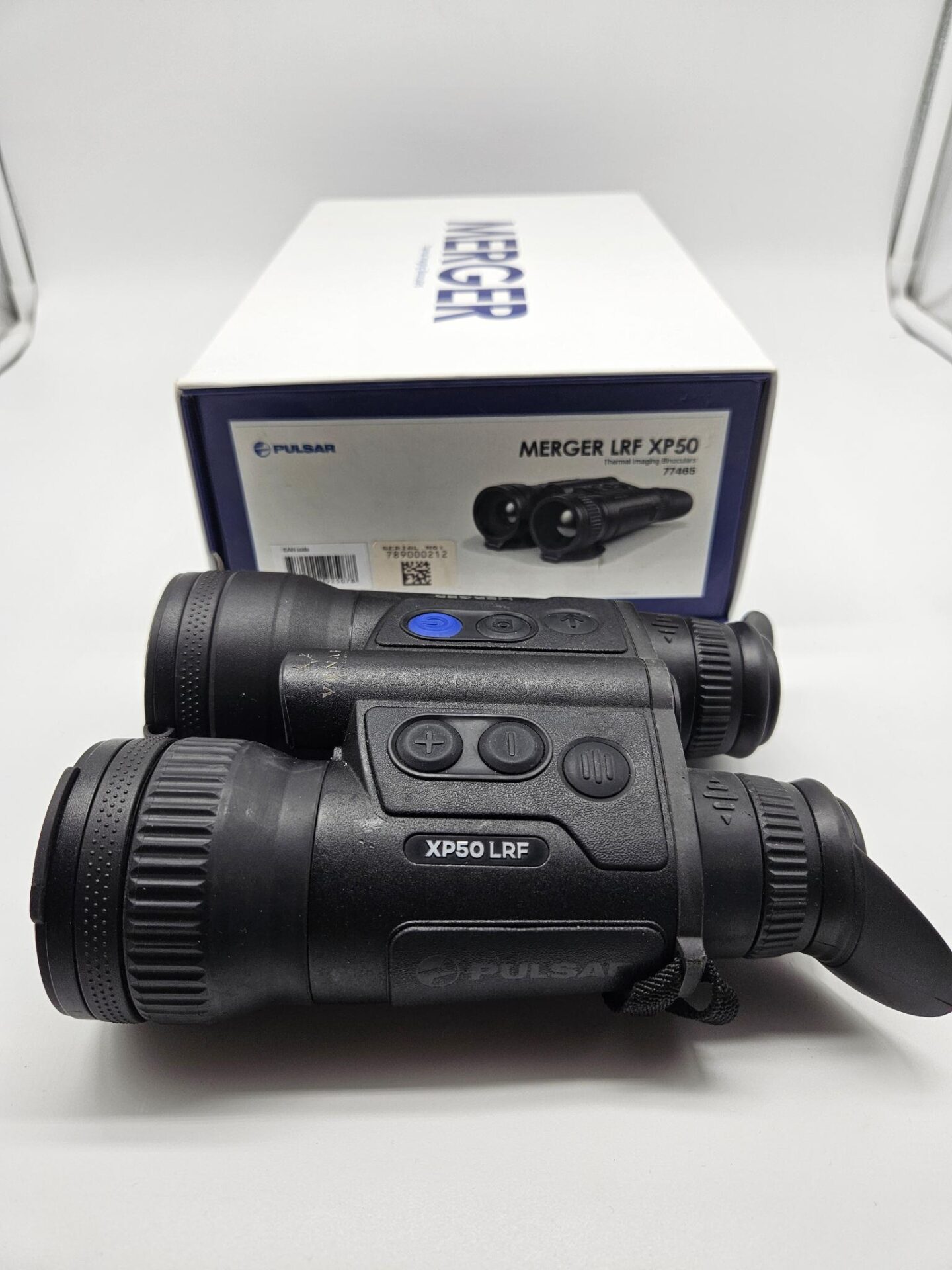
Pulsar Merger LRF XP50 thermal imaging camera (binoculars) Thermal imaging camera in binocular design (for both eyes)Large 50mm lens diameterLRF: Integrated laser range finderCombined battery system: internal battery extender as additional battery Advantages of the Merger LRF XP50➤ Modern sensor with high sensitivity (NETD <25mK) - thus a better picture even in difficult visibility conditions or in high heat➤ High quality screen with a resolution of 1.024 x 768 pixels instead of the previous 640 x 480 pixels➤ Large lens: 50mm / F1.0 ➤ Robust magnesium housing➤ 4x zoom (basic magnification 2,5x, maximum magnification 20,0x)➤ 8 color palettes and 3 observation modes➤ Very good equipment: WLAN, recording function, picture-in-picture, laser range finderPulsar replaced the Accolade model series with the Merger model series in autumn 2022. This changes the feel of the device significantly. The merger comes much closer to the appearance of binoculars and is therefore less recognizable as a thermal imaging camera at first glance. The modified housing opens up new possibilities for energy supply. The merger is equipped with a new combined battery system. Novelty: Internal battery and external exchangeable batteryThe combination battery system of the Merger consists of an internal, permanently installed battery (4 Ah) and an optional additional battery (3,2 Ah), which again significantly extends the running time of the device (approx. 10 hours with both batteries).Higher resolution display than the predecessorPulsar donated the mergers also a higher resolution display (1.024 x 768 pixels, instead of the previous 640 x 480). The combination of a powerful and particularly sensitive sensor and a more detailed display enables better performance than the Accolade or comparable devices.The housing is made of magnesium and is therefore extremely impact and scratch resistant. Thanks to the IPX7 protection standard, the device is protected against dust, water and shocks. The thermal imaging camera is richly equipped: 8 color palettes are complemented by three different viewing modes (field, forest, city). The viewing modes change the color accent of the respective color palette again. The device has a 4x magnification and a pleasantly low basic magnification of 2,5x. This is particularly helpful at short distances, as the device allows a wider viewing angle and thus offers a high level of viewing comfort even in forest areas and over short feeding distances.The equipment is supplemented by WLAN (StreamVision integration), video and photo recording, picture-in-picture function for better orientation and a laser range finder. Advantages of the merger thermal imaging cameraThe merger models of Pulsar are designed as thermal imaging binoculars. The advantage of the binoculars over the monoculars, which are very popular with hunters, is that they relieve the strain on the eyes during long observation phases. The human brain is used to 2 parallel "signals" through the two eyes. Binoculars make this possible. Monoculars, on the other hand, put more strain on the shooter over a longer period of time. This is where the merger shows its strengths.The merger has an integrated "Laser range finder(LRF – Laser Range Finder). By pressing a button, the distance to the observed object can be determined in a matter of seconds or permanently (scanning).Technical informationModelPulsar Merger LRFSensor640 480 x pixelsSensor technologyAmorphous silicon (ASi), uncooledDisplay1.024 768 x pixelsDisplay technologyAMOLED displayDetection distance (The device detects the heat source)1.800m (deer)Response (The heat source can be identified) Field of view at 100m21,8m widthBattery Lifeup to 10 hours battery designCombo battery system: internal external batterydetector sensitivity≤25µK (NETD)Pixel spacing (pitch)17μmframe rate50Hzlens focal length50 mmField of view (horizontal / vertical)12,4° (horizontal) / 9,3° (vertical)FocusF = 1.2lens focusmanual focus, internalDisplayAMOLED technologyDisplay resolution1.024 768 x pixelsOptical image magnification through the lens2,5xZoom (zoom levels)2x, 4x, 8x digitalcolor palettes8 pieces (white / black / red / red monochrome / rainbow colors / ultramarine blue / purple / sepia brown)observation modes4 pieces (forest / rocks / identification / user mode)Hot Spot TrackingnoDiopter adjustment for spectacle wearersyes (-5D~ 5D)recordingyes (1.024 x 768 pixels)video recordingyes (MP4)photo recordingyesdata storageja Storage16GBWiFijaApp Support / Mobile Streaming?yes / yes (via Stream Vision app)video outputnoposition sensornoRange finder (stadiametric)norange finder (laser)yes (up to 1.000m, single measurement and scan mode)marking lasernoAuxiliary light (lamp)noGPSnoCharging via power bank?yes (via micro USB port)HousingMagnesium alloyMounting1/4 inch camera threadWeight800 g (without battery pack)Size196 143 x x 76mmprotection classIPX7 (waterproof up to 1m depth for max. 30min)Operating temperature range, °С-25 ° to 50 ° C You are currently viewing placeholder content from YouTube. To access the actual content, click the button below. Please note that data will be passed on to third parties. More information Unlock content Accept necessary service and unblock content Frequently asked questions and answers about the device What is the difference to the Accolade Pro LRF? The technical data of the merger LRF largely comparable with those of the Accolade LRF Pro. The biggest difference (besides the case shape) is that now higher resolution display than the Accolade. Model Pulsar mergers Pulsar Accolade Pro Display 1.024 768 x pixels 640 480 x pixels Display technology AMOLED HD display AMOLED HD display Sensor 640 480 x pixels 640 480 x pixels sensitivity <25mK <25mK Pixel pitch 17μm 17μm Field of view at 100m 21,8m width 21,8m width Useful links about the device Quick Start Guide To the quick start guide (DE) (PDF data sheet opens in new window) Manual To the operating instructions DE) (PDF data sheet opens in new window)